


Where we came from.
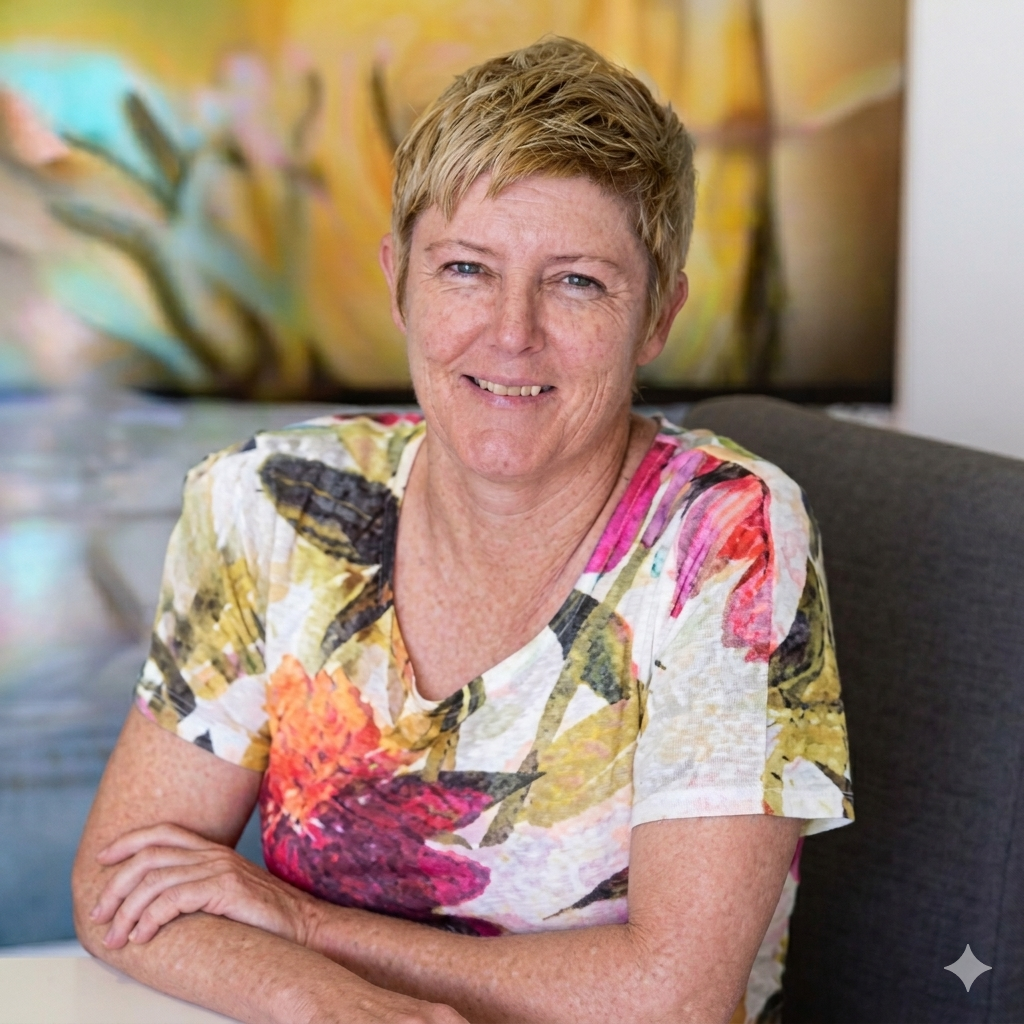
Rose spent twenty years in law enforcement across two jurisdictions, where she worked as a Detective investigating serious crimes and developed a deep understanding of the impact of crime on victims and their families. She went on to complete a Master of Digital Forensics before moving into work as a Forensic Analyst. Rose later held senior positions within the Federal government, managing investigations, intelligence and digital forensic capabilities.
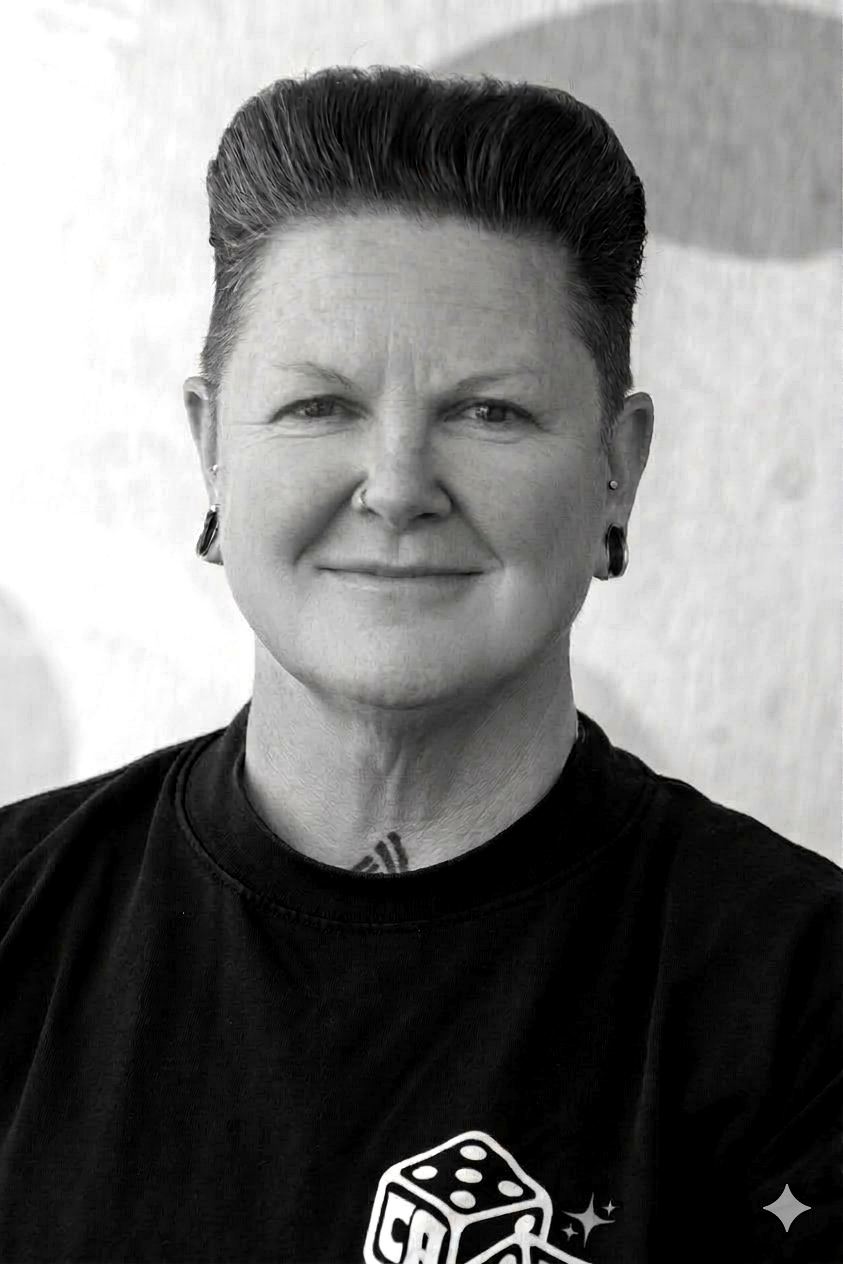
Andrew came from a different direction. His background is in intelligence, and he spent his career as a Chief Technology Officer and Chief Information Officer in Australian and international roles, in both government and the private sector.
We met in 2018, working for the Australian Federal Government. Rose was Director of Investigations. Andrew was the CIO. We bonded over a shared conviction: technology, used carefully and with intent, could shift social problems that had resisted other kinds of interventions.
The first five years.
We started small, and we started with data. Across both our careers, the same problem kept surfacing: people had almost no real control over their own information. It sat on someone else's servers, behind someone else's policies, available to anyone with the right access or the wrong intent. We thought blockchain offered a path to fix that. We thought it would be reasonably straightforward.
It took us five years.
We built Chain-FS, a system that links hyperscale cloud storage to public blockchain (more secure, not less, since no single party controls it), re-engineered from the ground up to make blockchain write speeds fast enough and cheap enough to be useful at scale. The result is hyperscale, immutable, zero-trust storage that lets individuals and organisations hold their own data without trusting anyone else to do it for them. It is the subject of three patents pending in Australia, the United States, and the European Union. As far as we know, it is a world first. On its own, it would have been a perfectly good company.
The conversation that changed everything.
While we were building Chain-FS, a survivor reached out to Rose for advice. She was in the middle of a domestic violence situation and needed help. She was referred to a specialist who quoted a modest fee, then charged her thousands of dollars, and left her with unanswered questions.
This survivor's experience wasn't an isolated story. Time and again, we saw survivors charged thousands of dollars, sometimes tens of thousands, by providers who, with the right expertise, should have identified and resolved the problem far faster and far more cheaply. Physical sweeps for hidden cameras, listening devices, and trackers in cars and homes existed. Detection across devices, accounts, social media, and other online environments, did not, in any meaningful sense.
So we started researching. The most important thing we learned, the thing that reshaped how we thought about the problem, is this:
Stalkerware is a tiny fraction of technology abuse.
The real tools of perpetrators are the legitimate ones. Calendars, maps, notes, shared photo libraries, family location features: the small conveniences built into every phone and every cloud account to make modern life easier. They are also, almost without modification, the perfect instruments for surveillance and coercive control. No virus scanner will ever flag them, because there is nothing wrong with them. The problem is who is using them, and how.
Building the capability.
We built a research lab. We bought all the stalkerware we could find and put it through its paces on real phones, cloud accounts, and consumer devices, and we broke a few along the way. We documented everything we learned and developed a methodology for detecting technology-facilitated abuse across the full range of methods perpetrators use. Many of those methods, we found, were hiding in plain sight, inside legitimate tools and services, where the rest of the industry wasn't looking.
We supported our first victim survivor in 2022. From there it grew, mostly through word of mouth from the sector. Today, we work nationally and are expanding internationally. We support a growing network of domestic violence agencies across the country, with new partners onboarding every month. Thousands of victim survivors have come through our work. Each one leaves understanding what was happening to them, equipped to stop it, and safer for having gone through it.
We publish our research openly to the DV sector, train our partner agencies at no cost, and speak regularly at national and international conferences. Our research program now includes the University of Canberra and our first PhD candidate, with further partnerships in development.
Joliro. Secure by design.
A digital safe space for every survivor, regardless of language, geography, or digital confidence, with support for twenty-one languages. Joliro brings together a suite of purpose-built tools in a single platform, each addressing a specific gap in how technology-facilitated abuse is identified, documented, and responded to. Whether used independently by survivors or alongside a caseworker, the platform forms a complete response to technology-facilitated abuse, and a safe space for survivors to reclaim control over their digital lives.
Joliro is the result of everything we have built: our blockchain and AI capabilities, our research lab, five years of learning how perpetrators actually operate, and years of work alongside thousands of survivors and agencies who have shaped it.
Joliro is secure and private by design. We cannot see your data. We will never sell it. We will never use it for advertising. We will keep adding tools and keep educating and empowering survivors. Our one-on-one service hasn't changed, but survivors' options for staying safe have greatly expanded. We'll keep investing in the research and keep growing our services, because the work is not finished and the people we are doing it for cannot afford for us to slow down.
Rose & Andrew
Visit joliro.org to learn more about the tools that make up the platform.